When planning a residential landscape, plant choices can be daunting. Here in East Tennessee, we are blessed with a great climate zone and for every one choice of plant we make, we could probably make 3 others that would work just as well.
With that being said, some plants get way over used and others are just ignored or not considered as often as they should be because they are less known.
Take note of these 3 native plant choices that offer significant interest, low maintenance and beauty to the landscape, but are often left out of the conversation.
Give consideration to these three plants in your next project and you won’t regret it.
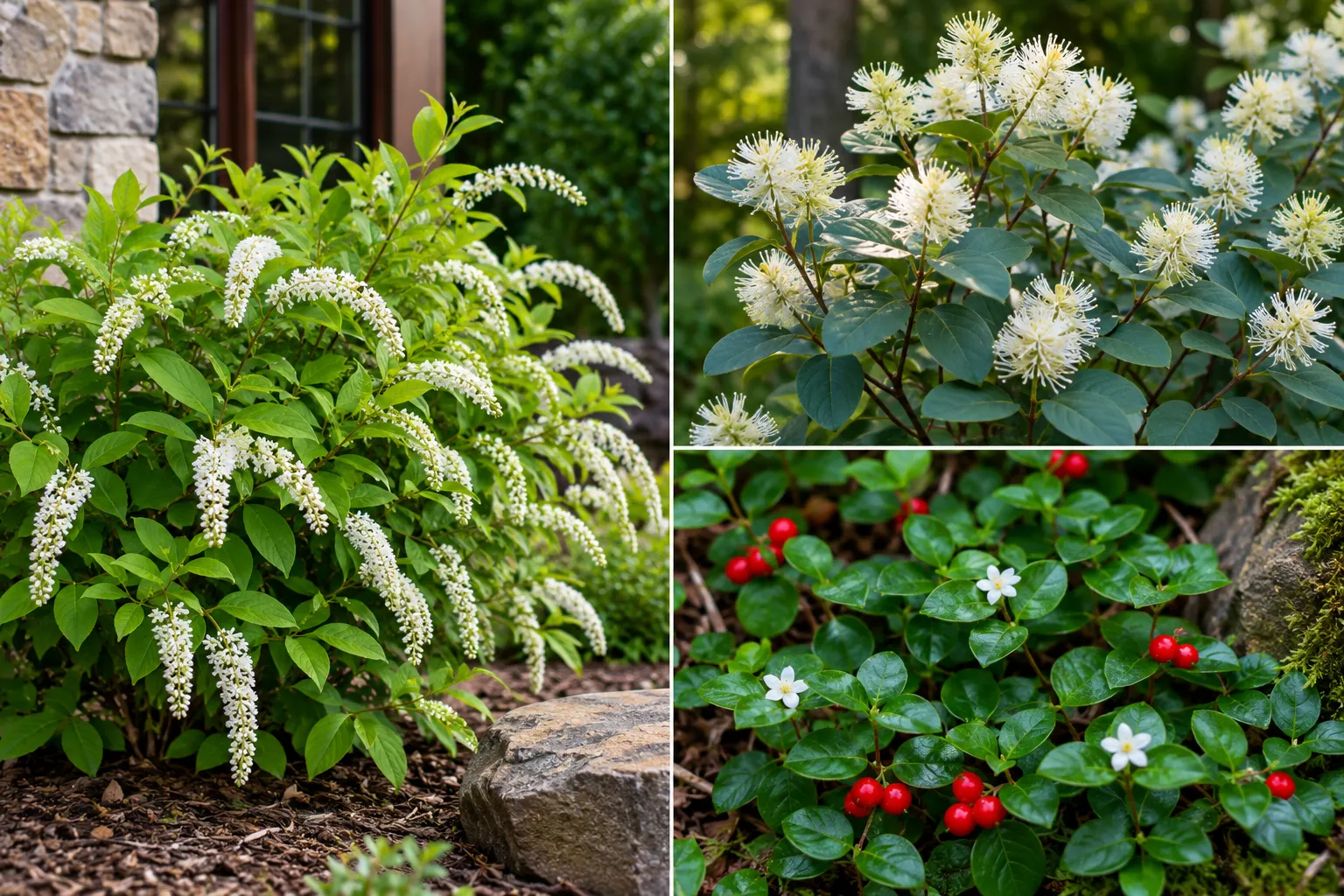
First, let’s consider the native Sweetspire. Itea virginica and some of the named cultivars that are worthy of consideration. Itea is a tough native deciduous shrub that is known for arching white sweetly scented flowering spikes in May and June. Hardy in zones 5-9 and is grows in full sun to full shade. Itea turns a bold dark red to purplish orangey or yellow color in Autumn. This shrub can handle wet feet and is a good cover for small birds as well as a food source for Bees, Butterflies and moths. Typically, the native Sweetspire will grow to 4-6 ft tall and wide, but this varies with some of the cultivars. ‘Little Henry’ is more compact at 1.5-3 ft tall and wide, while ‘Henry’s Garnet’ is more classically 3-5 ft tall and 4-6 ft wide. ‘Merlot’ is more mid-sized at 3-4 ft tall and wide and is known for its deep burgundy fall foliage.
Secondly, let’s consider another native shrub which is Fothergilla. The native version is Fothergilla gardenii and commonly known as Dwarf Fothergilla or Dwarf Witchalder. It is a native slow growing compact deciduous shrub growing anywhere from 1.5 ft to 6 ft tall and about 3-4 ft wide. It has honey scented showy creamy white bottle brush flowers that emerge in April – May before the foliage emerges. Fothergilla prefers full sun to part shade and the foliage will be a dark green to bluish tone. It is hardy in zones 4-8 and is very useful in the landscape for woodland gardens, foundations and mixed shrub borders or as a specimen plant. It’s fall color will be vibrant shades of Yellow, Orange, Red and Purple. Cultivars include ‘Mount Airy’, ‘Blue Shadow’ and ‘Blue Mist’. Blue Shadow and Blue Mist have interestingly blue toned foliage as it matures throughout the season with a silvery tinge to them as well as the beautiful fall color in Autumn. Blue Shadow grows to about 4-6 ft tall and wide. Fothergilla is comfortable in irregularly wet conditions and attract Bees, Birds and other pollinators.
The last of our three under-utilized landscape plants to consider is a native ground cover plant. ‘Mitchella repens’ or Partridgeberry. This is a low growing evergreen mat-forming vine that is native to the woodlands and shaded forest floors of Eastern N. America. I have seen it often along the trails in the Great Smoky Mountains National Park. It is a short 1-3 inch tall trailing vine with oval to heart shaped leaves. It produces small fragrant white to pinkish flowers in late Spring to Summer and this leads to bright scarlet berries that provide a food source for birds and small mammals throughout Winter. Partridgeberry is hardy in zones 3-9 and prefers part to full shade with acidic well drained humus soils. It is highly useful as a ground cover in woodland gardens and along water features or under acid loving shrubs like Azaleas and Rhododendron. It is a slow spreader that is useful in naturalizing shade gardens.
I hope that these 3 under-utilized plants will become more requested and used more often in your landscaping plans or renovations to make your garden extraordinary and unique.